Transform
Turn the read into a decision — agent catalogues, operating-model studios, and a briefing deck.
Step 1 · Diagnose
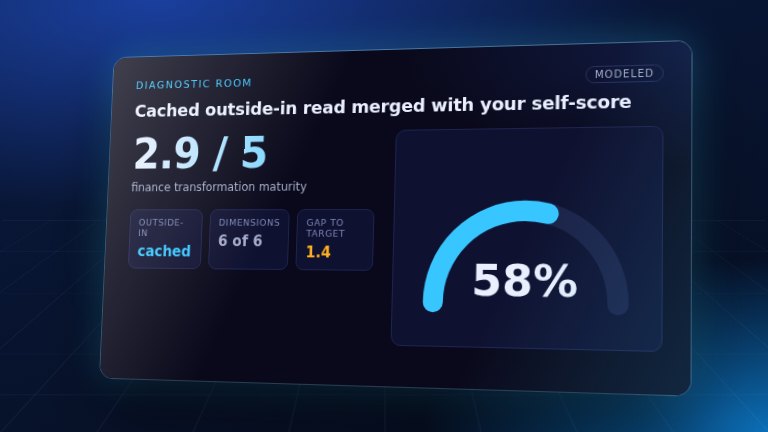
Diagnostic Roomoverview open
Read a company's cached outside-in diagnostic and the finance AI maturity self-assessment inside the Transform suite.
Step 2 · Prioritize
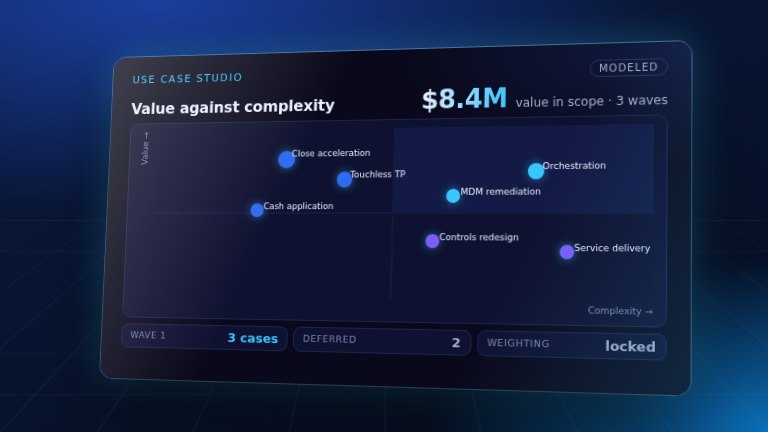
AI Use Case Prioritizationoverview open
Score and rank an AI portfolio on value against complexity.
Step 3 · Design
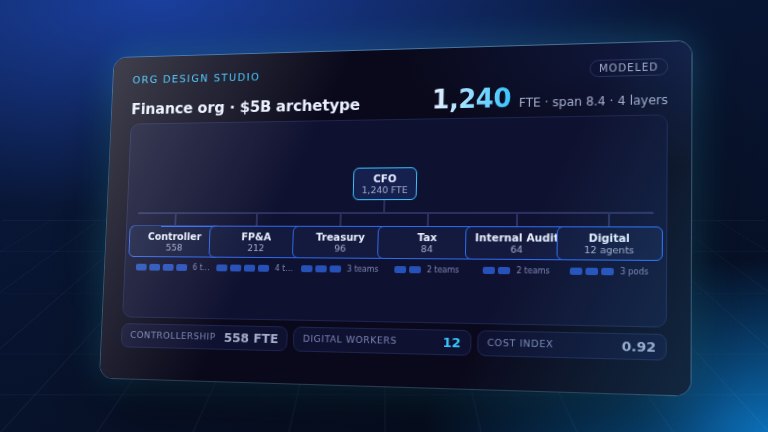
Org designoverview open
Designing the operating model around agentic work.
Step 3 · Design
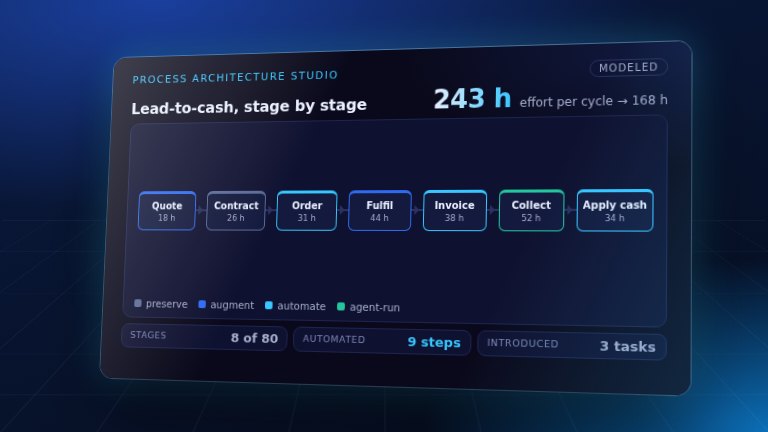
Process Architecture Studiooverview open
Map process to activity, decide what happens to each unit of work, and read the effect on roles, delivery channels and data lineage.
Step 3 · Design
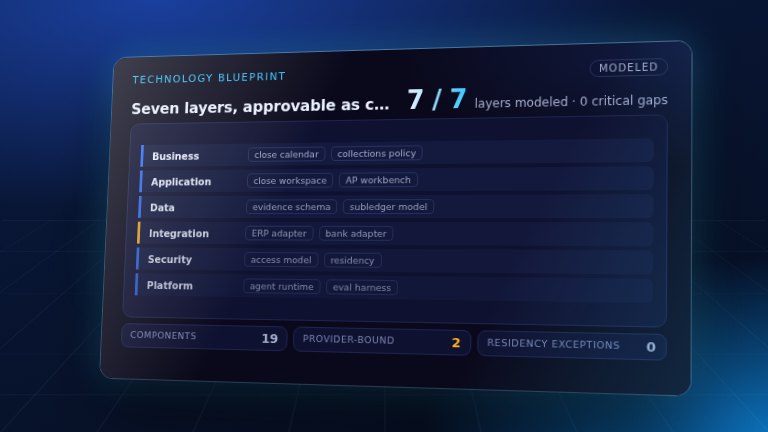
Finance Technology Blueprintoverview open
Compose a finance technology target architecture — components with owners and requirements, sourcing calls scored on five axes, provider portability by construction — checked live by the evaluation engine.
Step 3 · Design
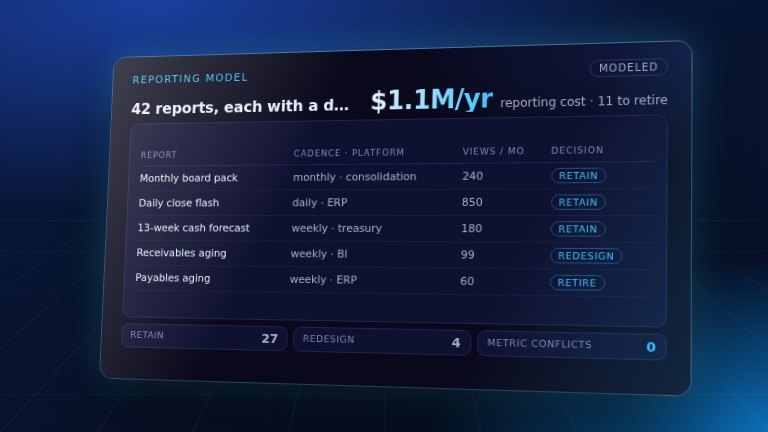
Reporting & Insight Modeloverview open
Rationalize a report estate, compose a governed KPI tree from approved metric contracts, and route every insight to a named decision, action and accountable role — checked live by the evaluation engine.
Step 3 · Design
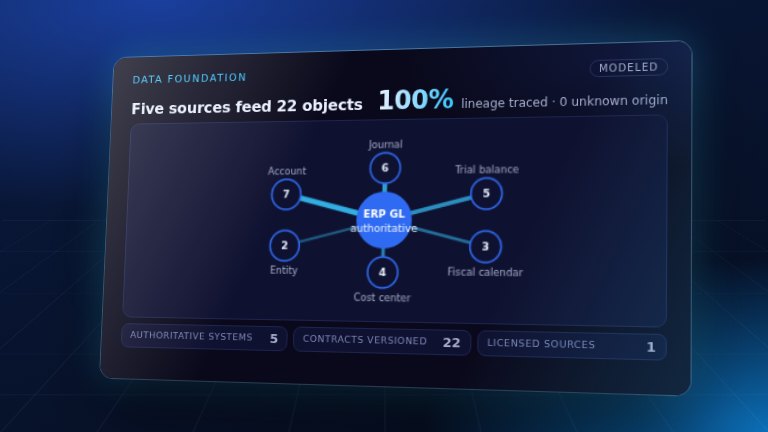
Finance Data Foundationoverview open
Compose the data foundation an agentic finance function depends on: canonical objects with versioned contracts, a deterministic formula registry, provenance that never invents an origin, and governed data products validated for rights, privacy, retention and tenancy — checked live by the evaluation engine.
Step 3 · Design
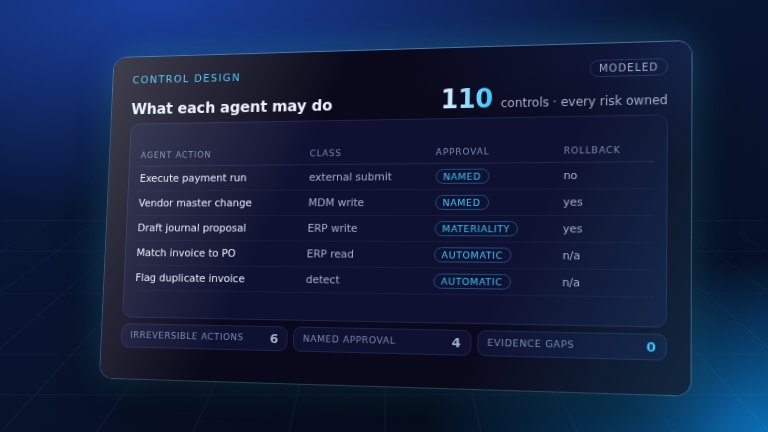
Control Design & ICFR Impactoverview open
Compose the risk-and-control matrix an agent-operated close depends on: financial-reporting risks mapped to ICFR assertions, key controls with owners and testable evidence, agent authorities with independent approval and rollback or compensating controls, and a deterministic close-case replay — checked live by the evaluation engine.
Step 3 · Design
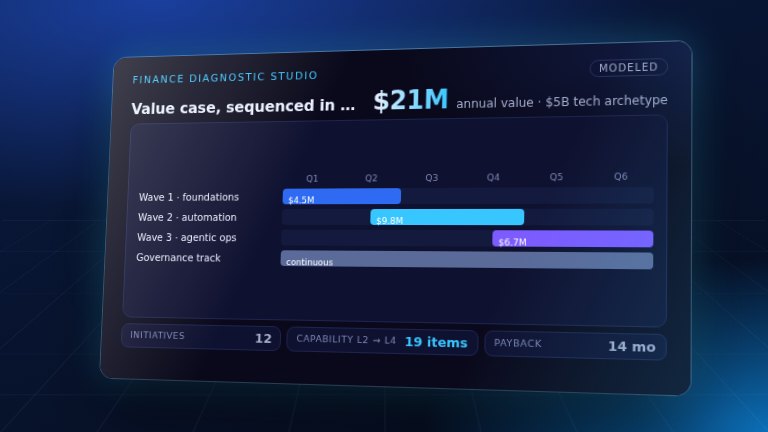
Agentic Finance Diagnostic Studiooverview open
Model a finance operating model from an archetype or a public company, then work it through capabilities, initiatives, sequencing and a roadmap.
Step 4 · Build
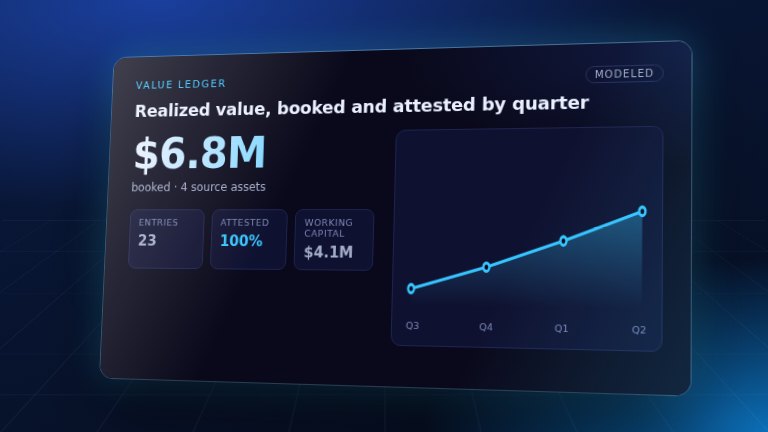
Value Ledgeroverview open
Book realized value against a source asset, a value lever and a quarter, and watch it accumulate across the Transform suite and over time — with modeled figures counted separately and kept out of the realized total, corrections netting against what they correct, and every source asset that has booked nothing named beside the number.
Step 4 · Build
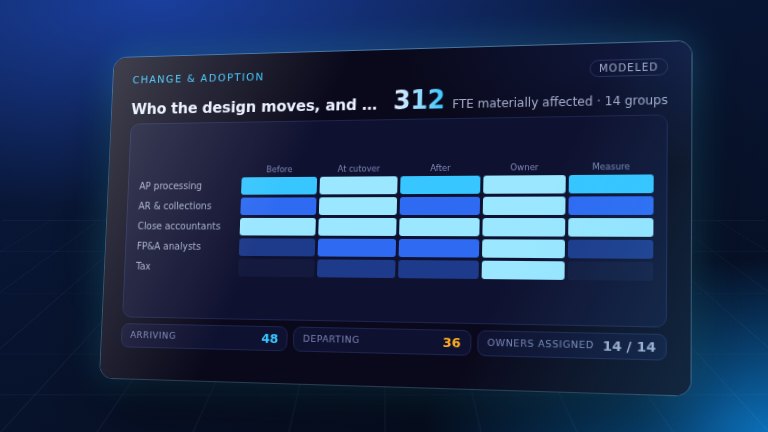
Change & Adoptionoverview open
Read the current- and future-state role profiles out of an org model, see which roles arrive, end or change size, and give each material group a named owner and a communication plan. Exposure ratings are disclosed as the directional tag they are, nothing is judged material until a threshold is declared, and a group reached only by broadcast is reported rather than counted as covered.
Step 4 · Build
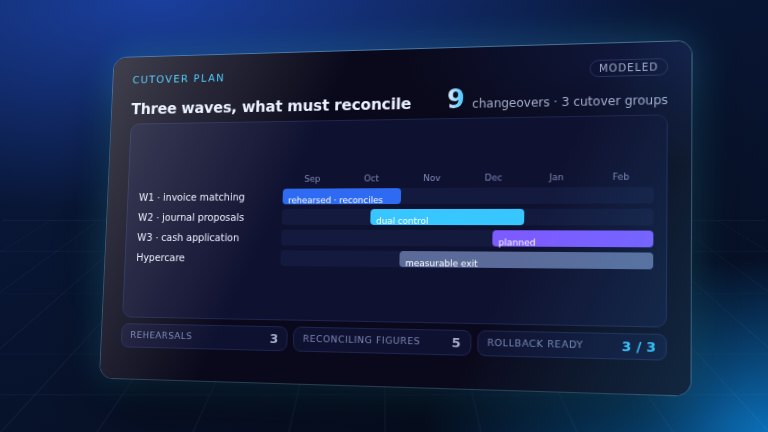
Cutover Planoverview open
Read the current- and future-state dispositions out of a process map, see which activities hand over from a person to a machine, and group them into cutovers with a named rollback owner. Sensitive domains are declared rather than inferred, a changeover that writes data is told apart from one that only reads, and a design that hands nothing over is reported as unstarted rather than as complete.
Step 4 · Build
Talent Strategyoverview open
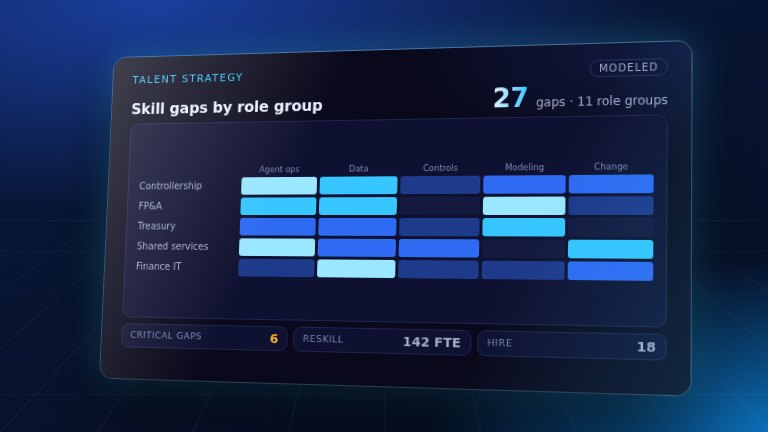
Read the current- and future-state skill profiles out of an org model, see where required proficiency rises and where it falls, and assign each material gap a lever — build, redeploy, or buy — with a named owner and a reason. Coverage and the supply assumption travel with every figure, and nothing is judged material until a threshold is declared.
Step 4 · Build
Release Trainoverview open
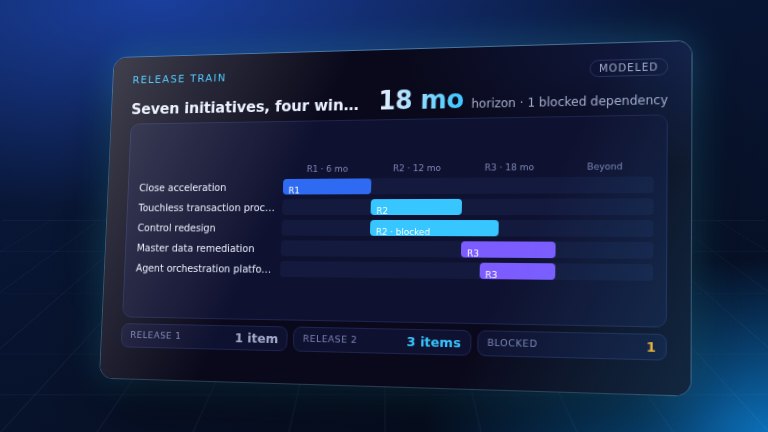
Sequence a finance transformation's initiatives into release windows derived from their own duration estimates, declare the dependencies between them, and see which declared constraints the schedule contradicts — a predecessor landing after what waits for it, a hard dependency between two things arriving in the same release, and circular chains no ordering satisfies. Nothing infers an edge: the charters carry enablers as prose and no dependency field at all.
Step 4 · Build
Declared Instance Registeroverview open
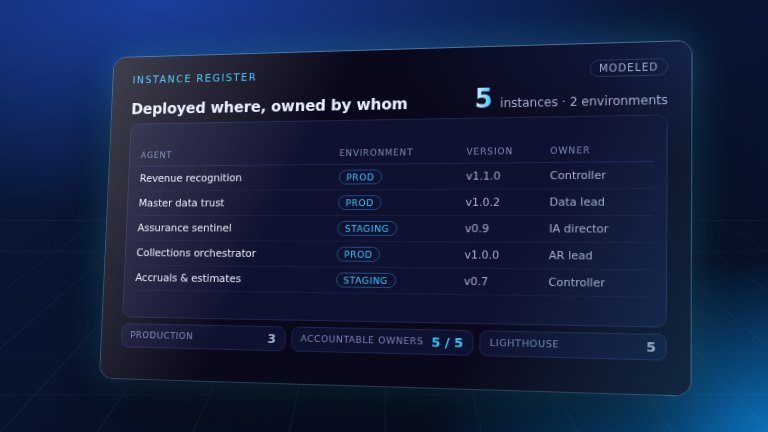
Record and review declared agent instances against the finance agent catalogue — environment, catalogue version, accountable owner and record state — with coverage across every catalogued agent, version drift against the shipped catalogue, and instances naming agents the catalogue no longer carries. It records declarations, not observations, and says so.
Step 4 · Build
Change Impact & Migrationoverview open
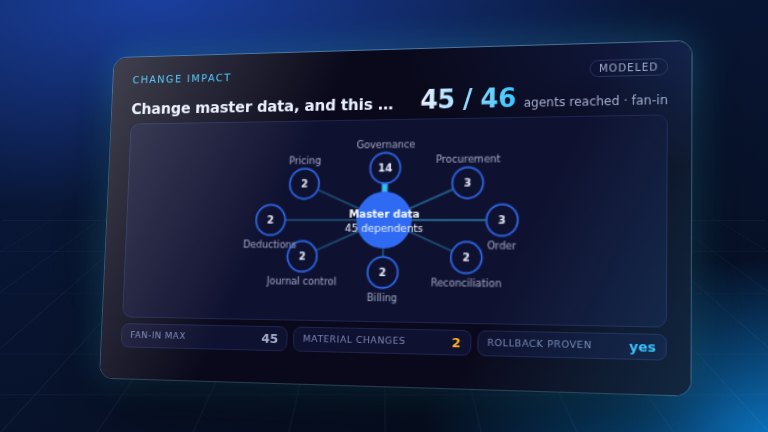
Operate the change-impact assessment over the full finance agent registry: rank where the portfolio concentrates so one change reaches most of it, walk the transitive blast radius of a proposed change, derive materiality from whether it lands on a figure that has to reconcile rather than from breadth, and surface the agents that declare no provider adapter in the governed source.
Step 4 · Build
Eval Harness & Golden Datasetsoverview open
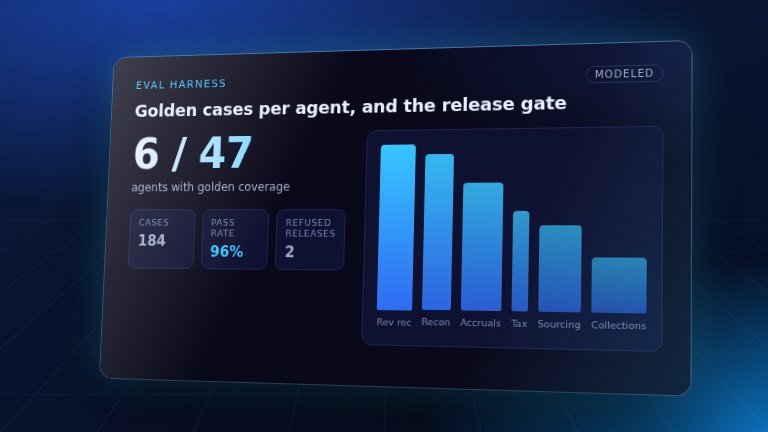
Operate the deterministic evaluation harness: edit and extend a versioned golden dataset, run per-agent release decisions against the full agent registry with agents refused rather than passed when they carry no evidence, keep a run history that makes a regression an attributable outcome change, and export a machine-readable evidence bundle the release gate reproduces.
Step 4 · Build
Finance agentscode required
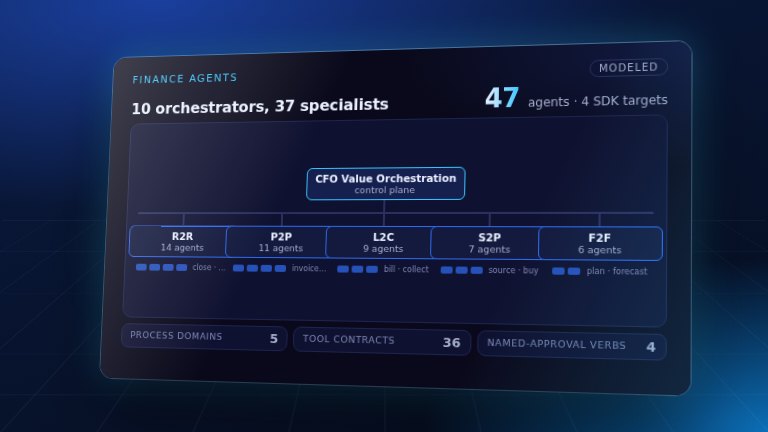
The finance agent reference library and the CFO Value Orchestration suite, each with a downloadable multi-SDK build bundle.
Step 4 · Build
Finance AI Amplifiedcode required
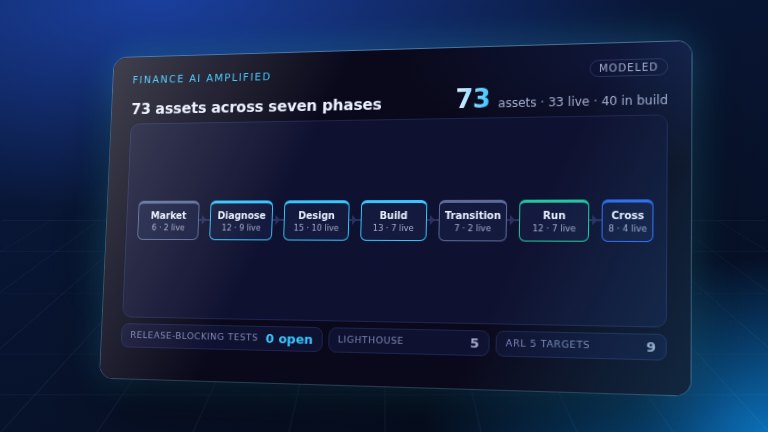
The KokoAI asset registry, the Lead-to-Cash seam pilot and the process framework studio.
Step 5 · Govern
Agentic governanceoverview open
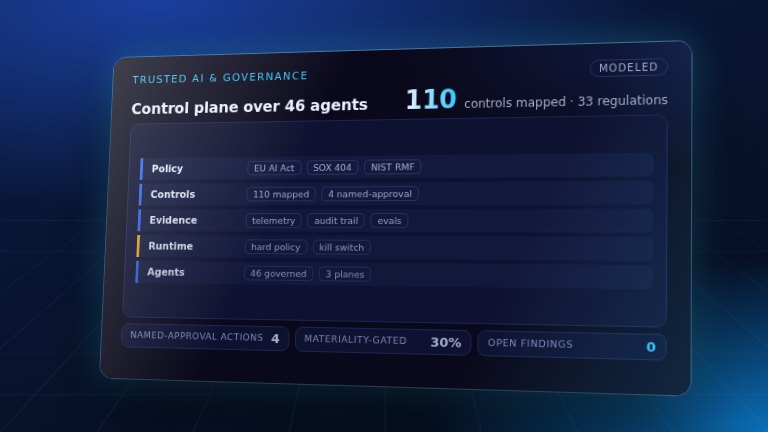
Controls, risk tiers, and assurance for agents in production.
Step 5 · Govern
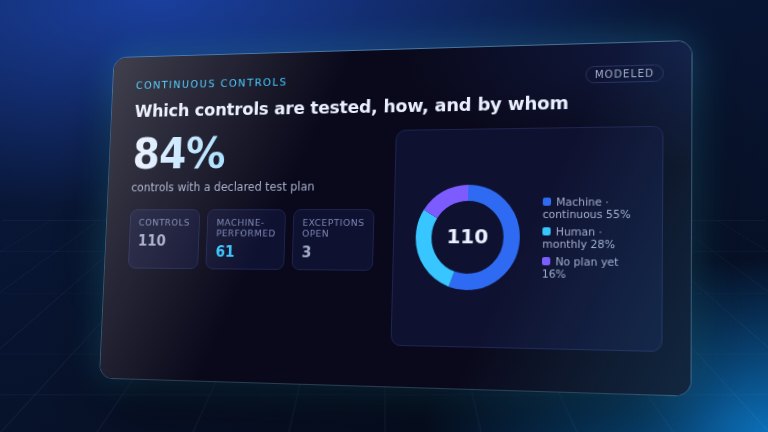
Continuous Controlsoverview open
The governance catalog declares a test procedure for every control and a cadence for none of them. Declare how often each control is tested, on what population, from which evidence source and by whom; coverage is reported as a number rather than one finding per uncovered control, and the page states that no test has run rather than leaving an absent results column to be read as no failures.

Step 6 · Operate
CxO Command Centeroverview open
The executive cockpit — KPIs, scenarios, and an agent operating model.
Step 7 · Brief
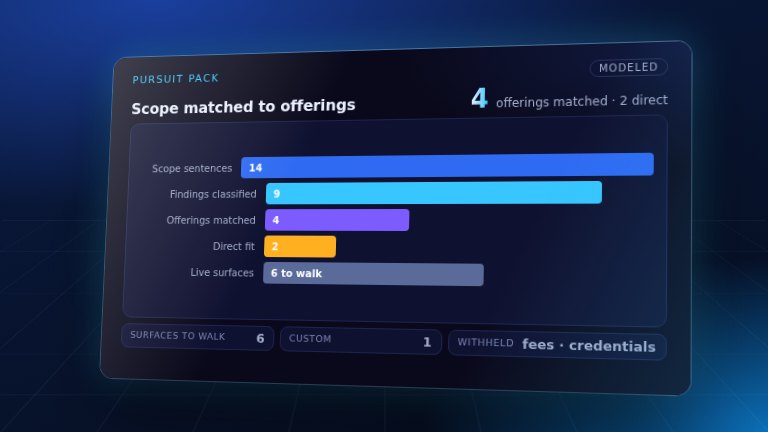
Pursuit Packoverview open
Type, dictate, or load an RFP's scope and assemble a tailored pack of published offerings and live surfaces — every selection shows the terms that matched.

Step 7 · Brief
Executive Briefing Studiooverview open
Assemble a company-specific, persona-framed executive deck from the site's own intelligence.
AI Stack Economics
CFO-first calculator for enterprise AI cost, TCO, unit economics, ROI, and payback across the whole stack.
Connect to your AI assistant
Add Koko Knows as an MCP connector in ChatGPT or Claude so your assistant can read the Daily Pulse, podcasts, and headlines directly.
Ask KokoAI
Cited answers across news, vendors & capabilities.